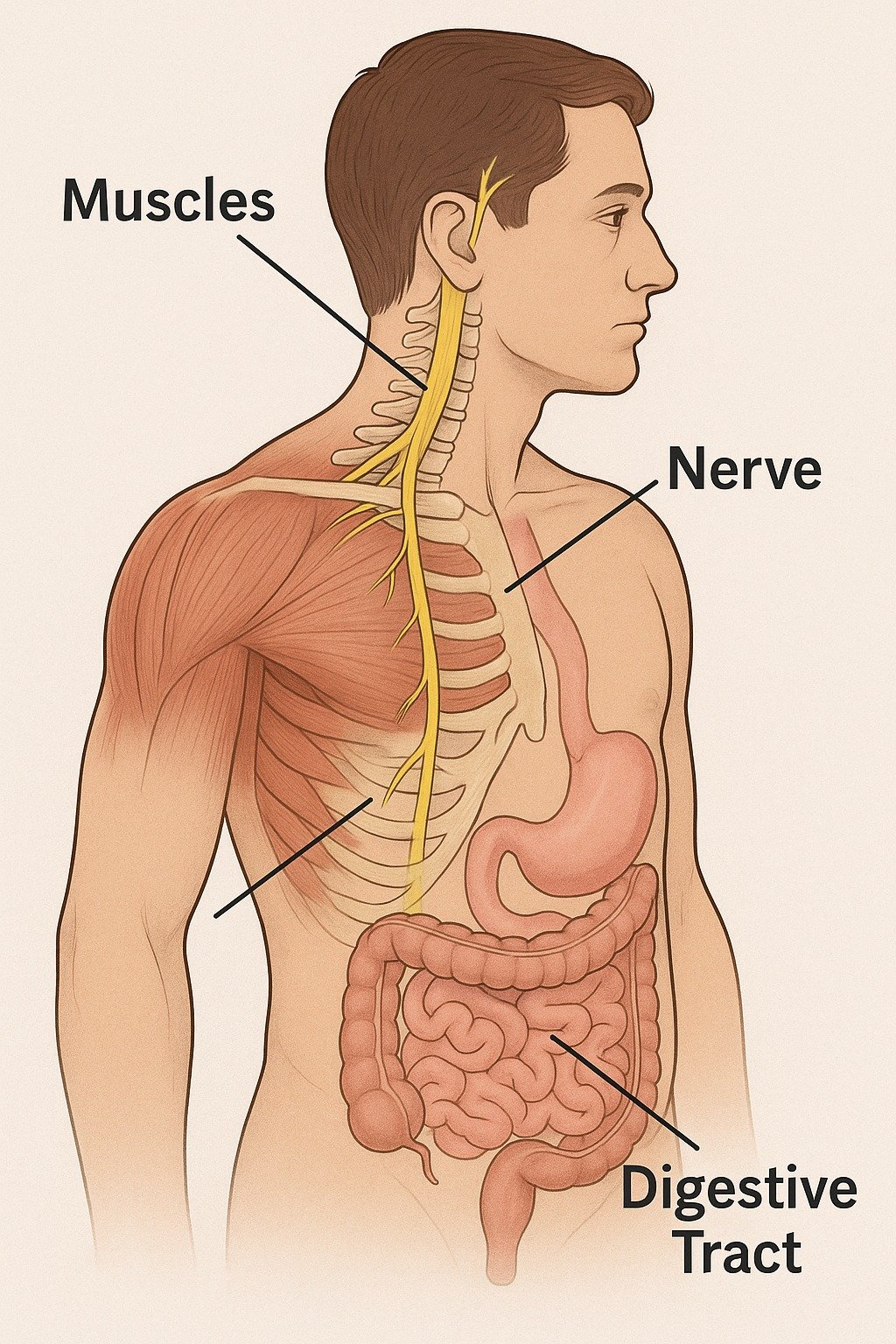
An Overlooked Contributor to GI Dysfunction: Neuromuscular Compensation
Gastrointestinal (GI) dysfunction is widely recognized, yet many people never find a clear explanation for symptoms such as bloating, reflux, constipation, gallbladder discomfort, vomiting episodes, or spastic colon. After undergoing colonoscopies, upper GI studies, imaging, medications, and dietary changes—many are still left without answers.
A frequently overlooked factor involves the connection between the neuromuscular system and the digestive tract, specifically how the nerves communicate with the organs that support digestion.
How Neuromuscular Compensation Affects the GI System
The digestive tract relies on a constant flow of neural signals to regulate motility, enzyme secretion, organ function, and protective reflexes. When muscles in the thoracic spine (mid-back) become overactive—often because other muscles such as the abdominal stabilizers or glutes are under-working—the resulting compensations can create excess pressure on the nerves that contribute to GI function.
This can lead to disrupted or inconsistent neural communication, potentially contributing to symptoms such as:
Bloating or abdominal distention
Constipation or irregular motility
Reflux or nausea
Spasms of the colon
Referred discomfort near the gallbladder
Sensations of tightness or cramping under the ribs
Because these patterns involve muscular coordination rather than visible structural disease, they often do not appear on imaging or standard GI testing.
Why This Is Often Missed
Conventional diagnostics focus on structural abnormalities, inflammation, or organ pathology. When tests come back normal, symptoms are often attributed to diet, stress, or “functional” GI disorders without further exploration of the neuromuscular system.
A Neuromuscular Restoration Specialist evaluates the body differently—similar to how an electrician checks a breaker panel to determine which circuits are receiving proper energy and which are overloaded or underpowered. When key stabilizing muscles are not engaging correctly, the thoracic region often compensates, placing unintended pressure on the neural pathways associated with digestion.
Restoring Proper Communication
Through precise manual muscle assessment, a Neuromuscular Restoration Specialist can identify which muscles are not receiving effective neural input and which are overcompensating. As these imbalances are corrected, the body can restore more accurate signaling between the nervous system and the GI tract.
For many individuals, this can reduce or eliminate symptoms that remained unresolved.
When neuromuscular compensation is a root contributor to dysfunction, correcting it is often essential for the body to regain normal digestive function.